



tandem rolling mill process
/The modern tandem cold rolling mill represents a pinnacle of metal processing technology, offering manufacturers unprecedented control over material properties while maximizing production yields. In today's competitive manufacturing landscape, where material costs constitute a significant portion of operating expenses, optimizing the tandem mill cold rolling process has become essential for maintaining profitability. These sophisticated systems, consisting of multiple rolling stands arranged in sequence, provide numerous opportunities for improving material utilization through precise thickness control, reduced scrap generation, and enhanced process stability. The strategic integration of specialized components like intermediate roll s and vertical roll s further enhances the capabilities of tandem cold mill s, allowing for finer adjustments and better management of complex rolling parameters. Precision Thickness Control in Tandem Cold Rolling Mills At the heart of improved yield in tandem cold mill operations lies the ability to maintain exceptionally tight thickness tolerances across the entire length of processed material. Modern tandem cold rolling mill s achieve this through advanced automatic gauge control (AGC) systems that continuously monitor and adjust roll gaps in real-time. These systems utilize precise hydraulic mechanisms that can make micro-adjustments at speeds matching the rapid throughput of contemporary tandem mill cold rolling lines, often processing material at velocities exceeding 1,500 meters per minute. The multi-stand configuration of tandem cold mill s allows for progressive reduction across successive stands, with each stand contributing to the final dimensional accuracy while minimizing the stress on any single reduction point. The strategic placement of intermediate roll s in six-high mill configurations has particularly enhanced thickness control capabilities in modern tandem cold rolling operations. These additional rolls serve to distribute rolling forces more evenly while reducing work roll deflection, resulting in improved profile consistency across the strip width. The presence of intermediate roll s in a tandem cold mill setup effectively decouples the control of strip profile from flatness, allowing operators to optimize both parameters independently. This separation of control variables leads to significant reductions in edge trimming requirements and associated material losses, directly improving overall yield percentages in high-volume production environments. Tandem Rolling : Advanced Profile and Flatness Management Systems The implementation of sophisticated profile control technologies in tandem mill rolling operations has dramatically improved material utilization rates in recent years. Modern systems employ arrays of precision sensors that continuously monitor strip shape characteristics between stands, feeding data to computerized control systems that adjust rolling parameters accordingly. The incorporation of vertical roll s in some tandem cold mill designs has proven particularly effective for managing edge drop and center buckle tendencies, two common sources of material waste in conventional rolling operations. These vertically oriented rolls apply targeted pressure to the strip edges, compensating for natural material flow patterns that might otherwise lead to excessive edge thinning or center thickening. The tandem cold rolling mill 's multi-stand configuration enables a unique approach to profile management known as "profile inheritance." This technique involves deliberately creating specific strain patterns in early stands that subsequent stands then modify in controlled ways to achieve the desired final profile. By distributing the profile correction across multiple stands, the tandem mill cold rolling process avoids over-stressing any single deformation zone, reducing the likelihood of defects that might necessitate material rejection. This distributed approach to shape control not only improves yield but also enhances the consistency of mechanical properties throughout the coil length. Tandem Rolling : Minimizing Head and Tail Trimming Losses One of the most significant sources of material waste in tandem cold mill operations has traditionally been the trimming required at coil heads and tails, where thickness transitions and shape irregularities are most pronounced. Modern tandem cold rolling mill s address this challenge through several innovative approaches that have collectively reduced trim losses by as much as 40% compared to older generation equipment. Advanced threading systems now allow for faster and more stable entry of material into the first stand, minimizing the unstable rolling period that typically leads to excessive head trimming. Similarly, improved exit control systems in final stands ensure more consistent tail-end quality, reducing the length of material that must be discarded at coil completion. The strategic use of intermediate roll s in tandem mill rolling configurations has proven particularly effective at stabilizing the rolling process during these transitional periods. By providing additional support to work rolls during threading and tail-out operations, intermediate roll s help maintain consistent roll gaps even under varying load conditions. This enhanced stability directly translates to shorter transition zones at coil ends, preserving more usable material from each processed coil. Some advanced tandem cold mill s now incorporate predictive algorithms that anticipate and compensate for these transition effects, further optimizing material utilization throughout the entire production cycle. Tandem Rolling : Enhanced Scrap Reduction Through Defect Prevention The prevention of rolling defects represents another critical avenue for yield improvement in tandem cold rolling mill operations. Modern systems employ comprehensive monitoring networks that detect potential quality issues in real-time, allowing for immediate corrective action before significant material is affected. These monitoring systems track parameters ranging from surface finish and temperature uniformity to microscopic texture development, creating a holistic picture of product quality throughout the tandem mill cold rolling process. The multi-stand nature of tandem cold mill s provides unique opportunities for defect correction, as imperfections detected in early stands can often be mitigated or eliminated in subsequent stands before they become irreparable. The introduction of intermediate roll s in six-high tandem cold mill designs has significantly reduced the incidence of certain defect types, particularly those related to edge cracking and roll mark transfer. By providing additional support and load distribution, intermediate roll s help maintain more consistent work roll profiles throughout extended production runs. This consistency directly translates to fewer surface imperfections and reduced incidence of edge defects that might otherwise require material removal. Vertical roll systems complement these benefits by actively managing strip edges throughout the rolling process, preventing the development of edge cracks that can propagate into the usable material width. Maximizing Value Through Advanced Tandem Rolling The modern tandem cold rolling mill represents a remarkable convergence of mechanical engineering, materials science, and digital technology, all focused on the fundamental goal of transforming raw metal into high-quality finished products with maximum efficiency. Through the strategic implementation of advanced components like intermediate roll s and vertical roll s, coupled with sophisticated control systems, today's tandem mill cold rolling operations achieve yield levels that were unimaginable just a few decades ago. These improvements translate directly to enhanced competitiveness in global markets, where material efficiency often determines profitability. The journey toward optimal yield in tandem cold mill operations requires continuous attention to process details and willingness to adopt emerging technologies. From precision thickness control to defect prevention strategies, each aspect of the rolling process offers opportunities for material savings that accumulate significantly across high-volume production runs. As tandem mill rolling technology continues to evolve, manufacturers that stay at the forefront of these developments will maintain their advantage in an industry where incremental yield improvements can translate to substantial financial benefits. The future of cold rolling belongs to those who view material utilization not as a fixed parameter, but as an ongoing opportunity for process optimization and value creation.

We have successfully executed over 500
projects around the world,
many first-of-their-kind
research projects and products in China, including
We have successfully executed over 500
projects around the world,
many first-of-their-kind
research projects and products in China, including
-
2004
The 1st hydraulic AGC system for hot rolling of ribbon steel
-
2006
The 1st AFC system used for 1450mm skin pass mill
-
2009
The 1st 5-stand tandem line with 2-stand POR & Uncoiler for 650mm ribbon steel
-
2012
The 1st reversing mill for 1380mm strip
-
2016
The 1st soft-rolling system used in skin pass mill
-
2019
The 1st fully automated medium-width tandem cold rolling mill
-
2021
The 1st 5000KN Twin-stand double skin pass mill
-
2022
The 1st coupled pickling line & tandem cold mill with two modes - big roller & small roller
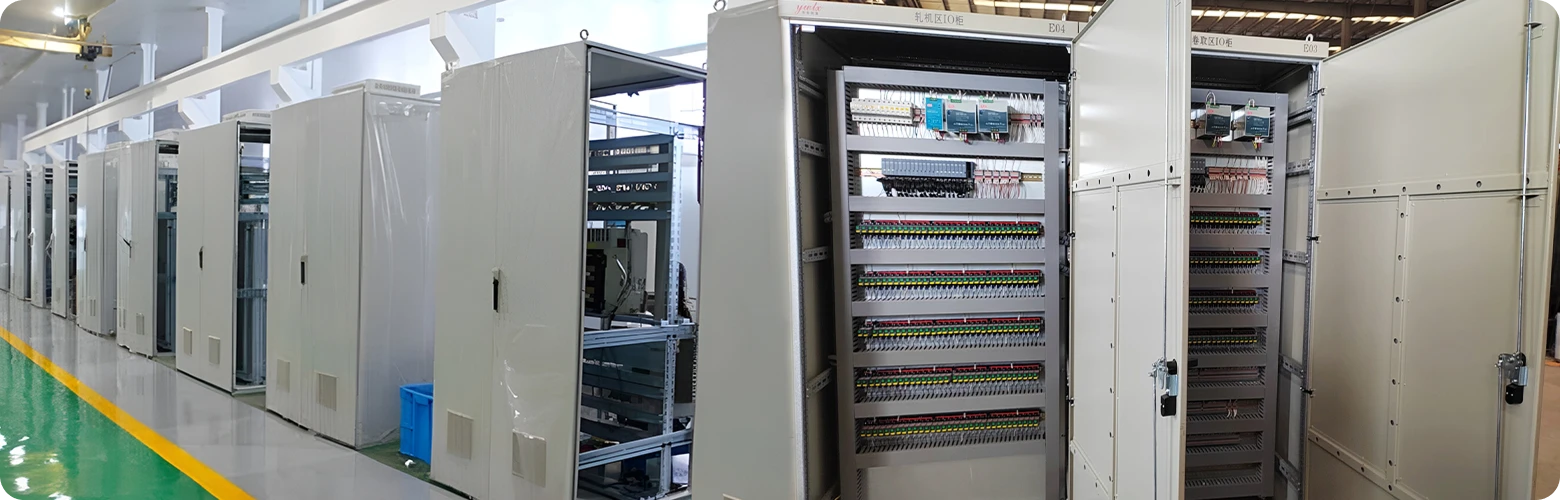
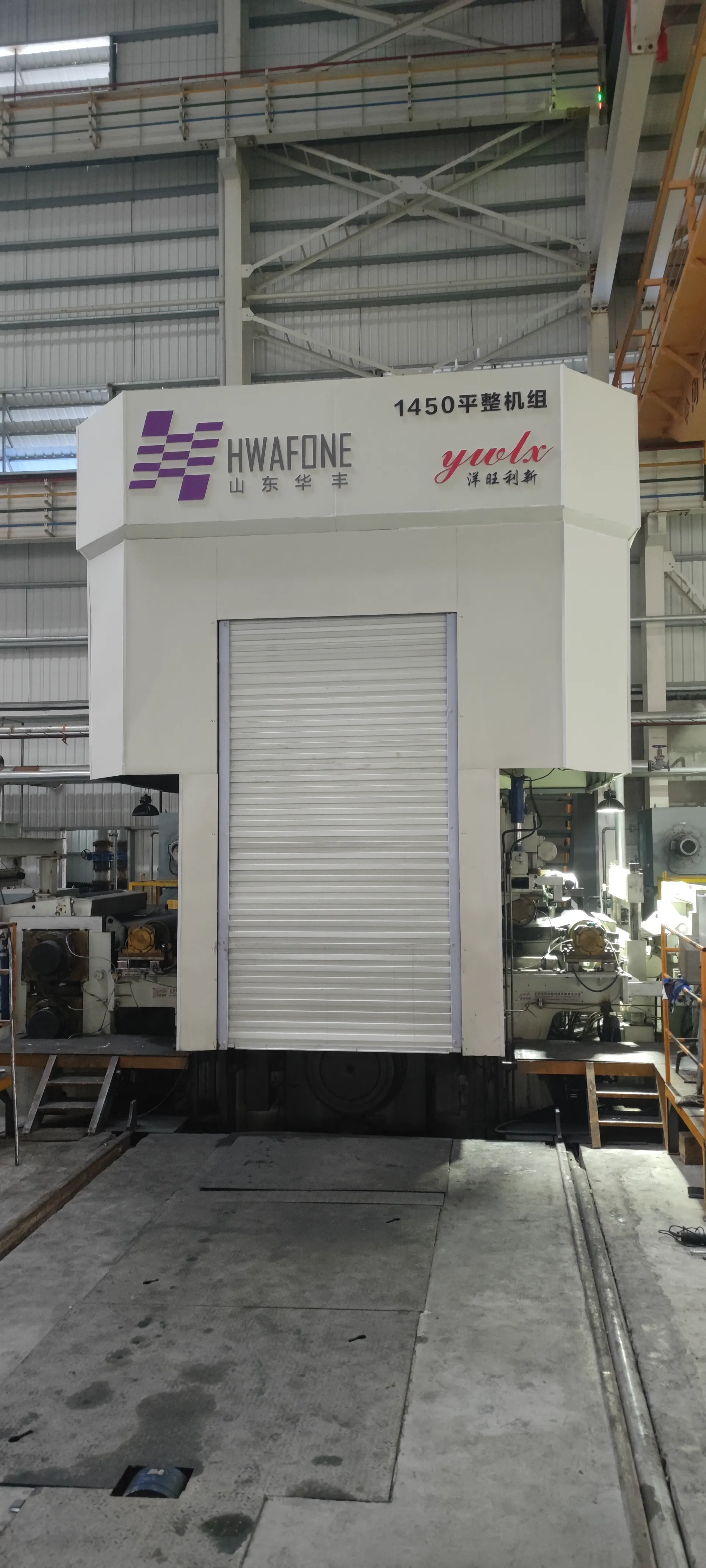
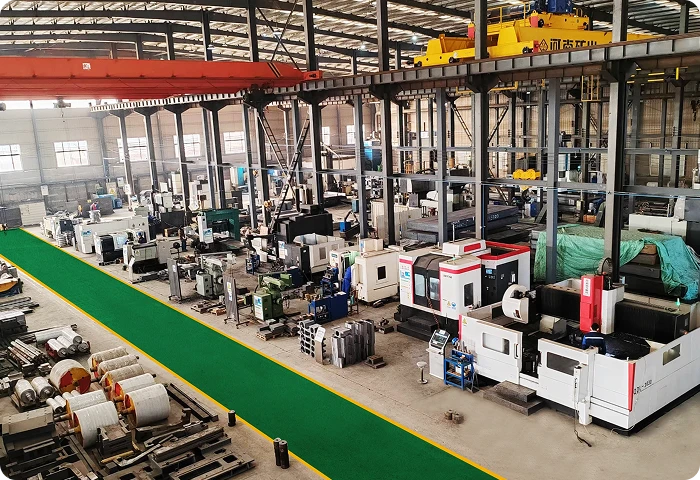
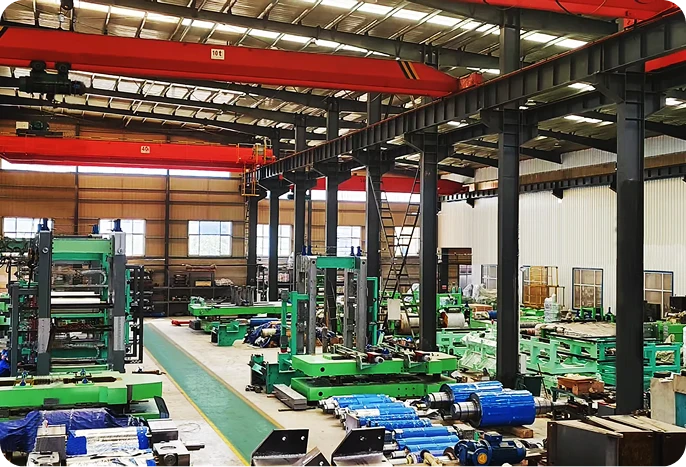
Yang Wang Li Xin operates a state-of-the-art facility over 66,000 square meters,and our manufacturing facility is fully equipped with high-tech machinery and high-capacity cranes. This enables us to handle large work pieces measuring 4.5m in width, 10m in length, and 1.5m in height, guaranteeing our capacity to produce 1800mm skin-pass mills and 1450mm rolling mills. The individual piece can weigh up to 100 tons.


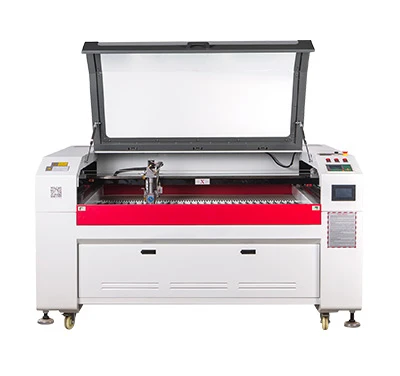
Quality is fundamental to the enterprise survival. We have established a comprehensive and meticulous quality management system and have successfully obtained ISO14000 certification. Starting from the design source, it supervises the entire production cycle, including design, procurement, processing, assembly, in-factory testing, installation, and online commissioning. The workshop is equipped with measuring tools like vernier calipers, spectrometers, hardness testers, and ultrasonic flaw detectors. They are used to check materials and control tolerances to ensure the final equipment meets or exceeds requirements. All products have a unique code, This enables the easy identification and traceability of the equipment components and ensures full control of quality.


-
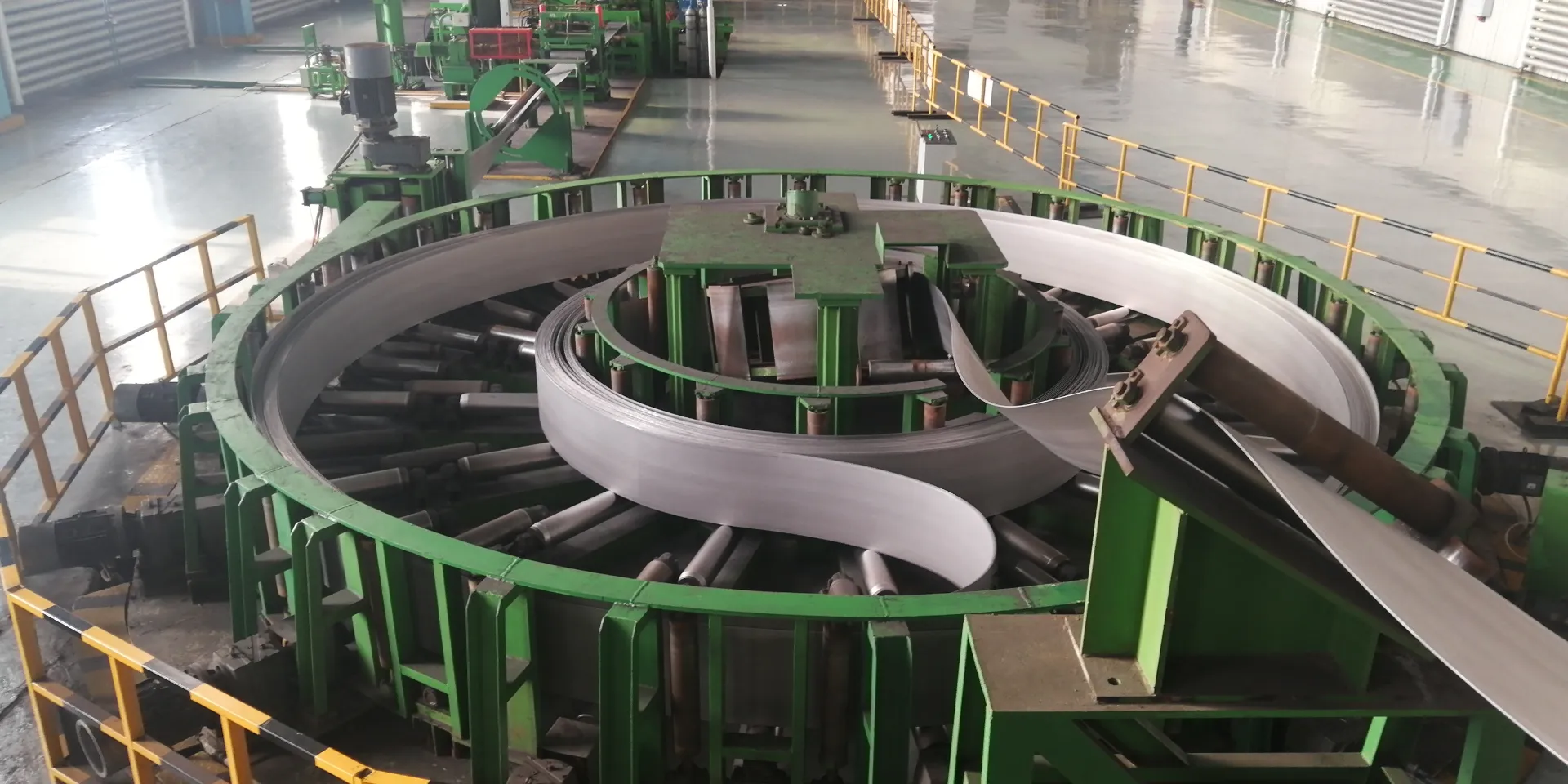 Improving Yield and Material Usage with Tandem Cold Rolling SolutionsThe modern tandem cold rolling mill represents a pinnacle of metal processing technology, offering manufacturers unprecedented control over material properties while maximizing production yields. In today's competitive manufacturing landscape, where material costs constitute a significant portion of operating expenses, optimizing the tandem mill cold rolling process has become essential for mainta
 -
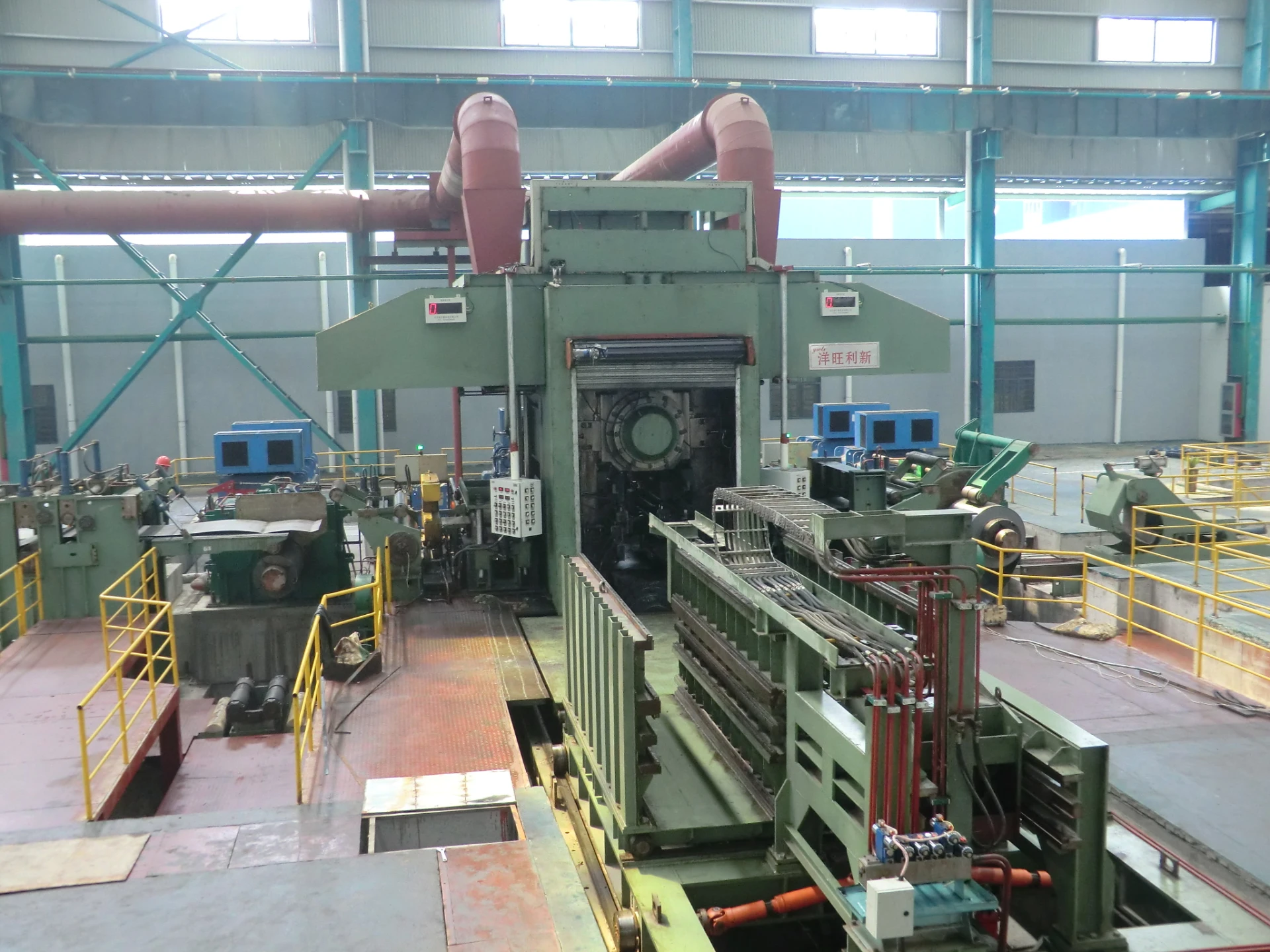 Four/Six-Hi Reversing Cold Rolling MillIn the heart of industrial machinery, the bar rolling mill stands as a cornerstone for metal reshaping processes, achieving remarkable proficiency in transforming raw metal into precise, high-quality bars. With the global demand for metal bars surging, understanding the intricacies of a bar rolling mill becomes more relevant for both professionals and enthusiasts in the field. A bar rolling mill,
 -
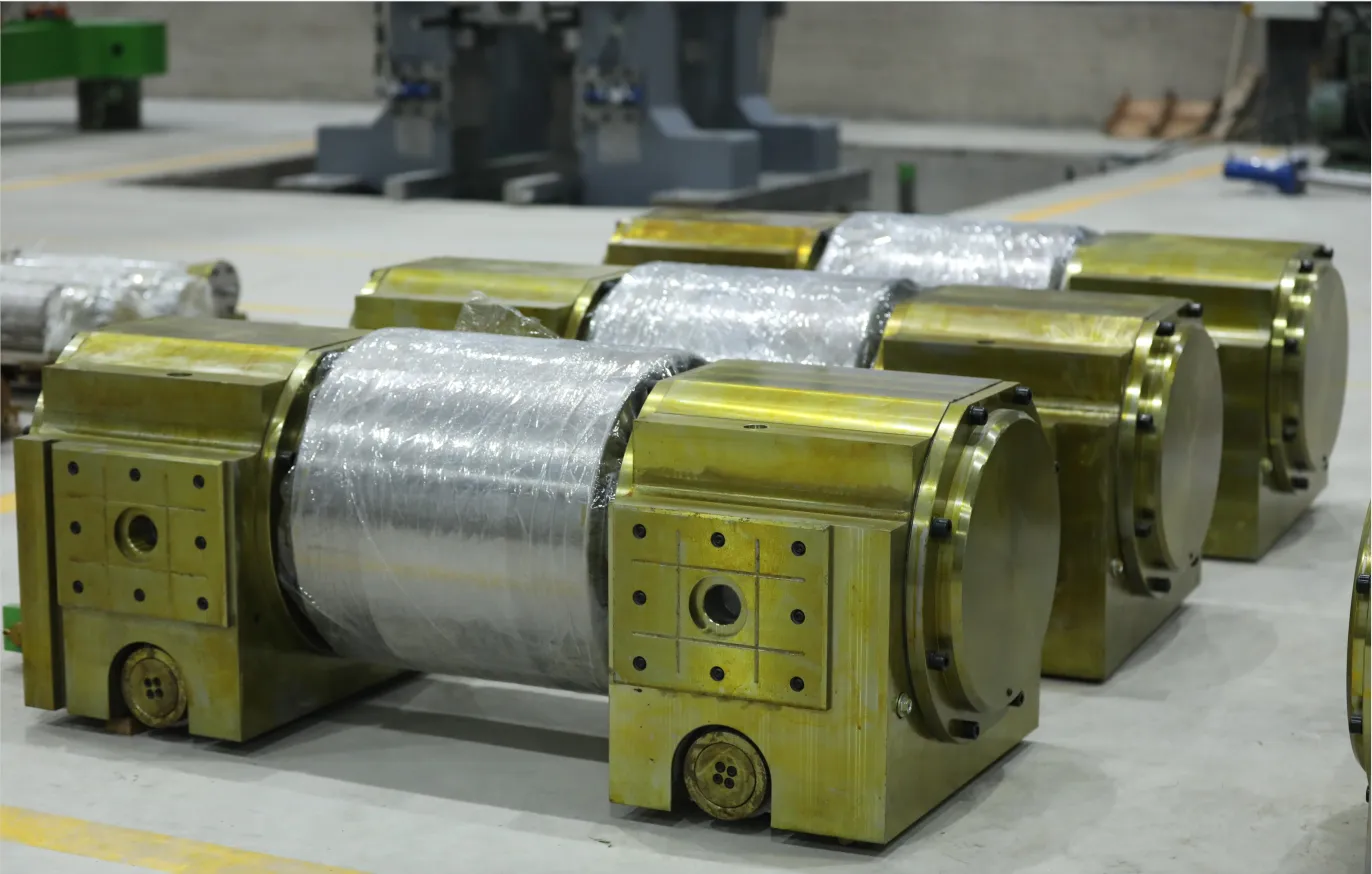 Original Rolling Mill Manufacturer - Trusted & Expert SolutionsIn the ever-evolving landscape of manufacturing technology, identifying a trustworthy and competent original rolling mill manufacturer isn't merely a task; it is a strategic move critical to your production line's success. With decades of engineering excellence, the pioneers in rolling mill manufacturing blend innovation, expertise, and experience to deliver solutions that not only meet but antici


